
Semiconductor vs Fuel Cell Breathalysers
When it comes to workplace safety and compliance, choosing fuel cell technology is essential. Superior fuel cell instruments deliver reliable, trusted quality while cheaper alternatives leave you likely to pay a higher price in maintaining a lower accuracy instrument with a significantly shorter operational life.
What Are the Differences?
For Australian workplaces that require reliable, accurate alcohol testing, semiconductor breathalysers are simply not up to the task. The low cost is offset by the high risk of inaccurate readings, frequent calibration, and inability to meet Police Grade standards.
In contrast, fuel cell breathalysers (like those used by our Alcolizer Technology devices), offer proven accuracy, durability, and compliance with Australian Standards requirements.
Semiconductor Breathalysers
Are commonly marketed at lower prices, appealing to consumers primarily through online retailers. These devices typically rely on a metal oxide semiconductor (MOS) sensor, which detects alcohol through changes in electrical conductivity when exposed to various volatile substances.
This technology has several significant drawbacks:
- Inaccuracy and Lack of Specificity
Semiconductor sensors cannot reliably distinguish between alcohol and other volatile compounds, such as acetone, gasoline fumes, hairspray, or even cigarette smoke. This leads to frequent false positives, compromising the reliability of results. - Limited Lifespan and Calibration Issues
Semiconductor breathalysers require frequent calibration and are prone to rapid sensor degradation. Their short service life and inability to maintain accuracy over time make them unsuitable for any application requiring precision. - Police Grade
Semiconductor-based are generally only suitable for passive screening, indicating a potential presence of alcohol. However, they can’t provide a Police grade breath alcohol concentration (BrAC) reading. For this reason, they are not trusted for police or industrial compliance purposes in Australia.
While these may be acceptable for occasional personal use where cost is the primary factor, they are not suitable for workplaces that require accurate, reliable, and defensible breath alcohol testing.
Electrochemical Fuel Cell Breathalysers
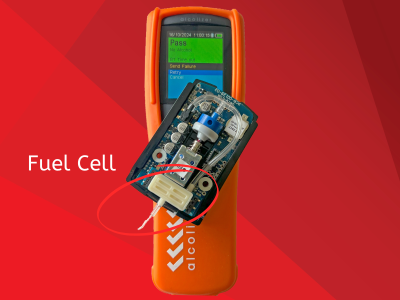
In contrast, electrochemical fuel cells offer a far higher level of accuracy and reliability. Fuel cell sensors work by oxidizing alcohol on a platinum electrode, generating an electrical current that is directly proportional to the amount of alcohol present in the breath sample. The advantages include:
- Superior Accuracy
Fuel cell breathalysers are highly specific to ethanol, eliminating the false positives that plague semiconductor devices. This ensures precise and consistent readings, even in the presence of other volatile substances. - Longer Service Life
Fuel cell technology is durable and maintains calibration far longer than semiconductor sensors, making it more cost-effective over time. This reduces maintenance costs and ensures that the device remains reliable for workplace or commercial use. - Police Grade
Fuel cell breathalysers meet the stringent accuracy requirements necessary for Police screening tests; meaning that there is a correlation between what a Police will measure and the breathalyser. In Australia, fuel cell breathalysers are trusted for workplace safety programs and are compliant to Australian Standards, ensuring that they meet the rigorous standards for alcohol testing in commercial settings.
Interested to know more about the technical aspects of fuel cell technology?
- Click to download our white paper on the use of fuel cell technology in breathalysers.
- Click to view the breathalysers in our range at Alcolizer Technology.
